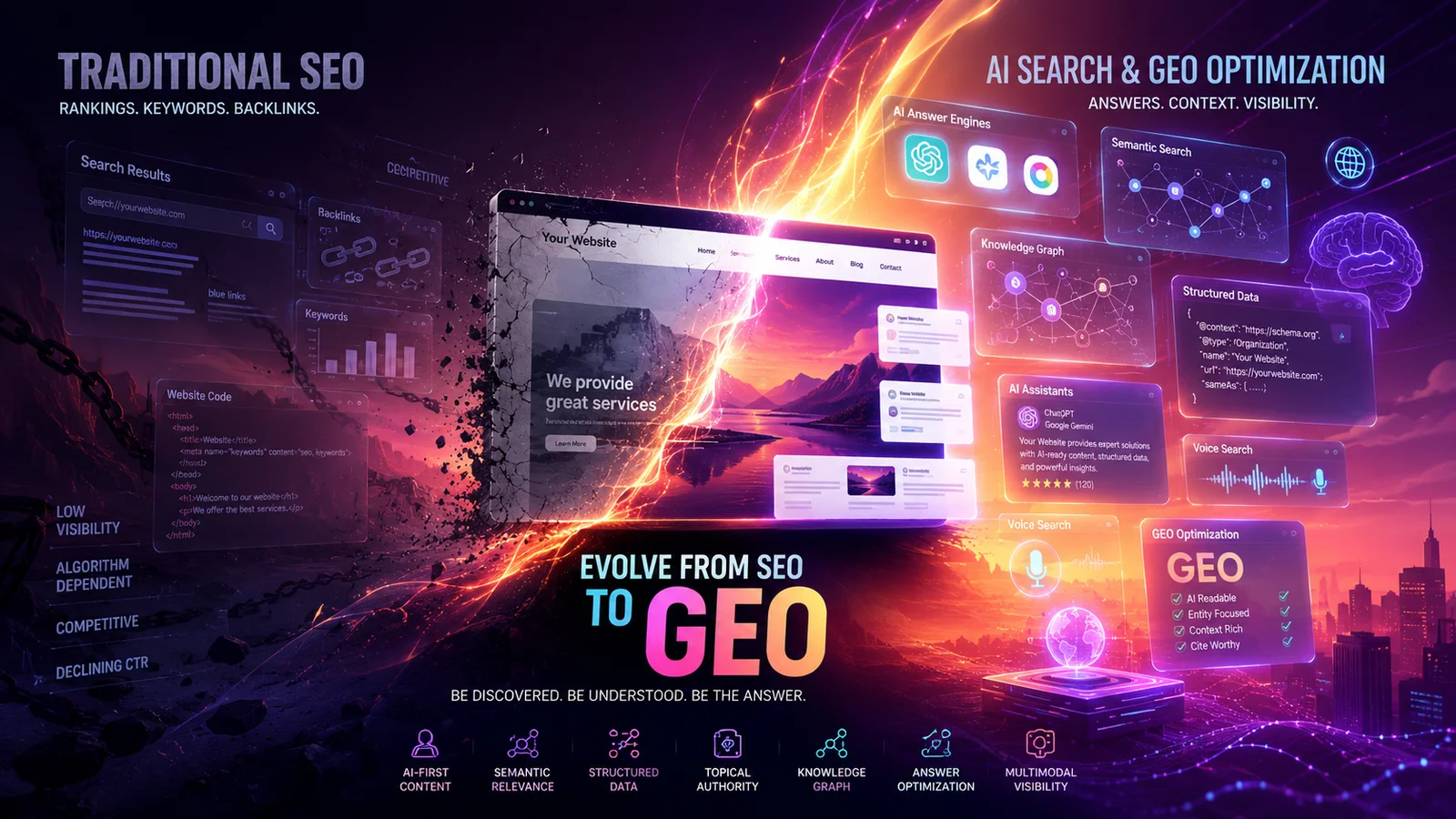
Your website can rank #1 on Google and still be completely invisible to ChatGPT, Perplexity, and Google’s AI Overviews. That’s not a hypothetical, it’s happening to businesses right now, and most of them don’t even know it. If you’ve never checked whether your brand shows up when someone asks an AI assistant a question in your industry, there’s a good chance the answer is no. Here’s why that’s happening, and what a modern SEO strategy in Chennai needs to look like in 2026.
Why Ranking #1 Doesn’t Mean What It Used To
For nearly two decades, SEO success meant one thing: get to the top of the search results page. That’s no longer the full picture. At the start of 2026, roughly 68% of Google searches end without a single click to any website, up from just 45% back in 2016.
Break down 1,000 typical searches today and only about 232 actually result in a click that leaves Google’s ecosystem. The rest are absorbed directly into AI Overviews, answered on the results page itself, or end the session without a click at all. Ranking #1 on a page nobody scrolls past isn’t a win anymore, it’s a formality.
So Why Is Your Website “Invisible” to AI?
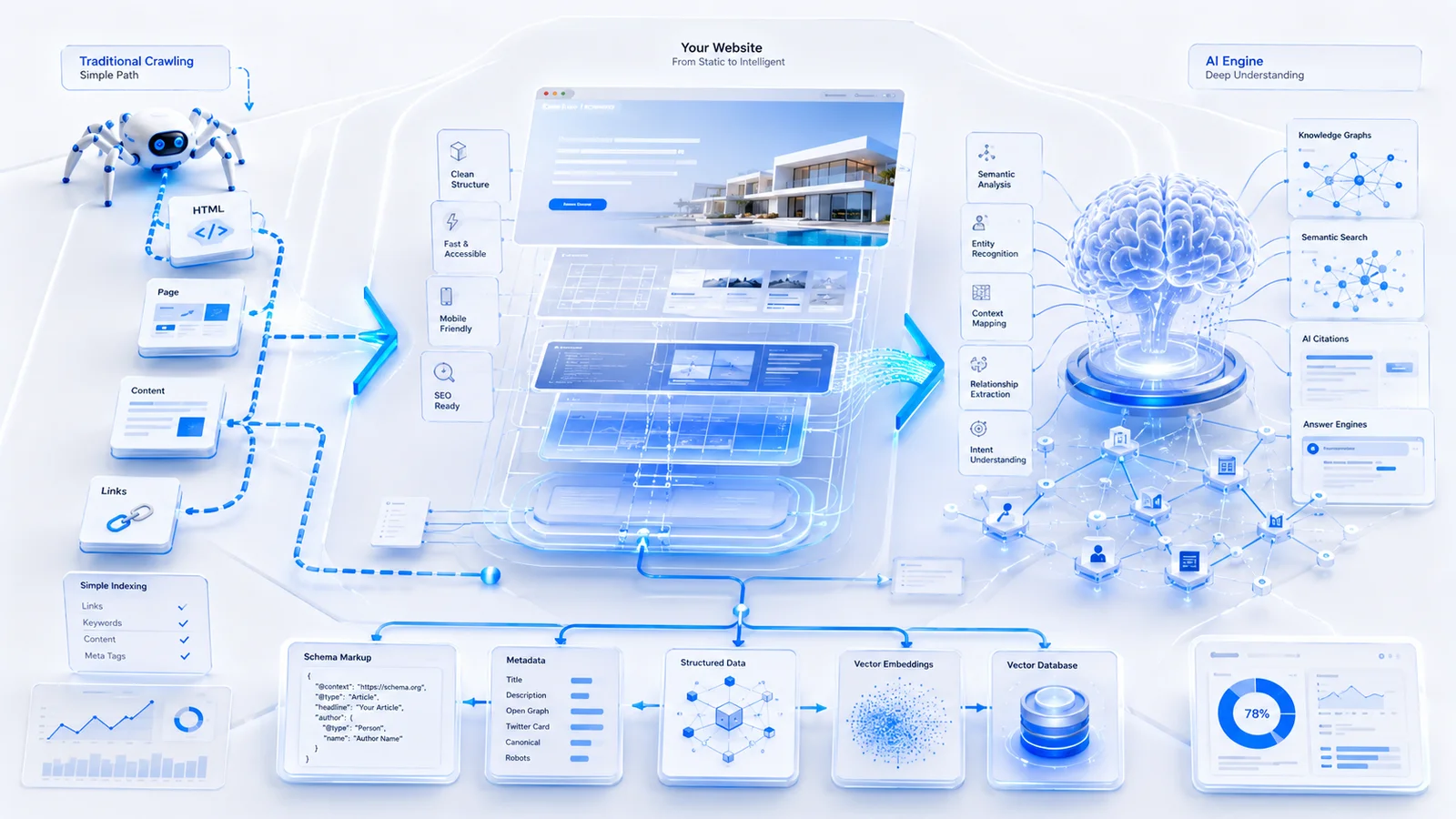
Search engines and AI answer engines don’t read your website the same way. Traditional SEO is built around keywords, backlinks, and page authority. AI systems like ChatGPT, Perplexity, and Google’s AI Mode work differently, they summarize, synthesize, and cite sources based on how clearly a page answers a specific question, how trustworthy the source appears across the wider topic, and how easily the content can be extracted and quoted.
Built around keywords, backlinks, and page authority.
Cite sources that answer one question clearly, are trusted across the topic, and are easy to quote.
A page can be perfectly optimized for traditional search and still get skipped entirely by an AI engine if it’s vague, buried in fluff, or doesn’t clearly state facts an AI can confidently repeat.
How to Check If AI Even Knows You Exist
Your Google Search Console won’t show you this. Instead, try manually asking ChatGPT, Perplexity, or Google’s AI Mode the exact questions your customers would ask, the kind you’d expect your business to answer. If your brand never comes up, even for questions you’d normally rank for, that’s your sign.
Early research also shows that the exact wording of a query heavily affects whether a brand gets mentioned at all, with broad category questions tending to favor large, already-trusted brands over smaller or newer ones. That means smaller businesses have to work harder to earn that trust signal in the first place.
This Is Called GEO — Generative Engine Optimization
The practice of optimizing content specifically so AI answer engines cite, summarize, or recommend your brand is known as GEO, Generative Engine Optimization.
It isn’t a replacement for SEO, it’s an additional layer built on top of it. Search industry events this year are already framing their agendas around exactly this shift, treating it as the defining tension in marketing right now.
The money is following this shift too. Verified ad-intelligence tracking now estimates roughly $200 billion in annual media investment flowing into advertising on AI platforms like ChatGPT and Perplexity, a channel that barely existed as paid media a year ago.
What to Actually Do About It
- Answer questions directly. Structure content so the core answer appears clearly near the top, not buried under three paragraphs of introduction.
- Build topical authority. AI systems tend to trust sources that cover a topic thoroughly, not just one page optimized around a single keyword.
- Make facts easy to extract. Clear statistics, definitions, and structured lists are far easier for an AI engine to quote accurately than long, narrative paragraphs.
- Track a new kind of metric. Start monitoring brand mentions and citations inside AI-generated answers, not just clicks and rankings.
- Keep investing in SEO. None of this replaces strong technical SEO, quality backlinks, and clear content, it builds directly on top of that foundation. Services like SEO, content marketing, and social media marketing all need to evolve together rather than in isolation.
Conclusion
Being invisible to AI isn’t a future risk, it’s already happening to businesses that assume ranking well on Google is enough. As more discovery moves into AI-generated answers, brands that adapt early will be the ones still getting found, while everyone else quietly disappears from the conversation.
If you’re not sure where your brand currently stands in AI-generated answers, it’s worth having a conversation with a results-driven digital marketing agency in Chennai to find out, and fix it before your competitors do.
Is your brand showing up in AI answers?
Get a free audit of your content, search visibility and AI readiness, with a clear plan to fix it.
Frequently Asked Questions
What does it mean for a website to be “invisible” to AI?
It means your website may rank well in traditional Google search results, but never gets cited, summarized, or recommended when someone asks an AI tool like ChatGPT, Perplexity, or Google's AI Mode a related question.
How is AI search different from traditional Google search?
Traditional search ranks pages using keywords, backlinks, and authority signals. AI search engines synthesize an answer from multiple sources, favoring content that clearly and confidently answers a specific question and can be easily extracted or quoted.
Do I need to stop doing SEO and switch to GEO instead?
No. GEO builds on top of strong SEO fundamentals rather than replacing them. You still need solid technical SEO and quality content, GEO simply adds a layer focused on AI visibility as well.
How can I check if my brand appears in AI search results?
Manually ask tools like ChatGPT, Perplexity, and Google's AI Mode the kinds of questions your customers would ask. If your brand doesn't come up even for topics you'd expect to rank for, that's a sign you need a GEO-focused strategy.
Why do smaller businesses struggle more with AI visibility?
AI engines tend to favor sources they already trust, and broad category questions often default to large, well-established brands. Smaller businesses need clear, well-structured, and authoritative content to earn that same level of trust.
Can a digital marketing agency help fix AI visibility issues?
Yes. An experienced agency can restructure your content for clarity and topical authority, monitor your brand's visibility across AI platforms, and integrate GEO into your existing SEO, content, and social strategy.