“We tried digital marketing once and it didn't work.” If you've said this, or heard it from another business owner, you're not alone. It's one of the most common doubts out there, and it's a fair question to ask before spending your budget. So let's answer it honestly: yes, digital marketing works, but only when it's done right. Most failure stories come down to avoidable execution gaps, not the channels themselves. Here is how a performance-focused digital marketing agency in Chennai transforms clicks into paying customers.
The Short Answer: Yes, But It Depends on Execution
Digital marketing isn't magic, and it isn't an automated guarantee either. It's a structured system of strategic tools, and results depend entirely on execution precision. A poorly targeted ad campaign or a website with no clear call to action will underperform no matter how much ad spend sits behind it. Conversely, a well-researched, data-driven strategy consistently outperforms traditional advertising across cost-efficiency, reach, and measurability.
Businesses that conclude digital marketing doesn't work are usually those who ran an isolated campaign for three weeks, evaluated prematurely, or skipped strategic foundations. Sustainable business growth comes from treating digital marketing as an ongoing revenue engine rather than a one-time experiment.
Proof: How Digital Marketing Actually Brings in Customers
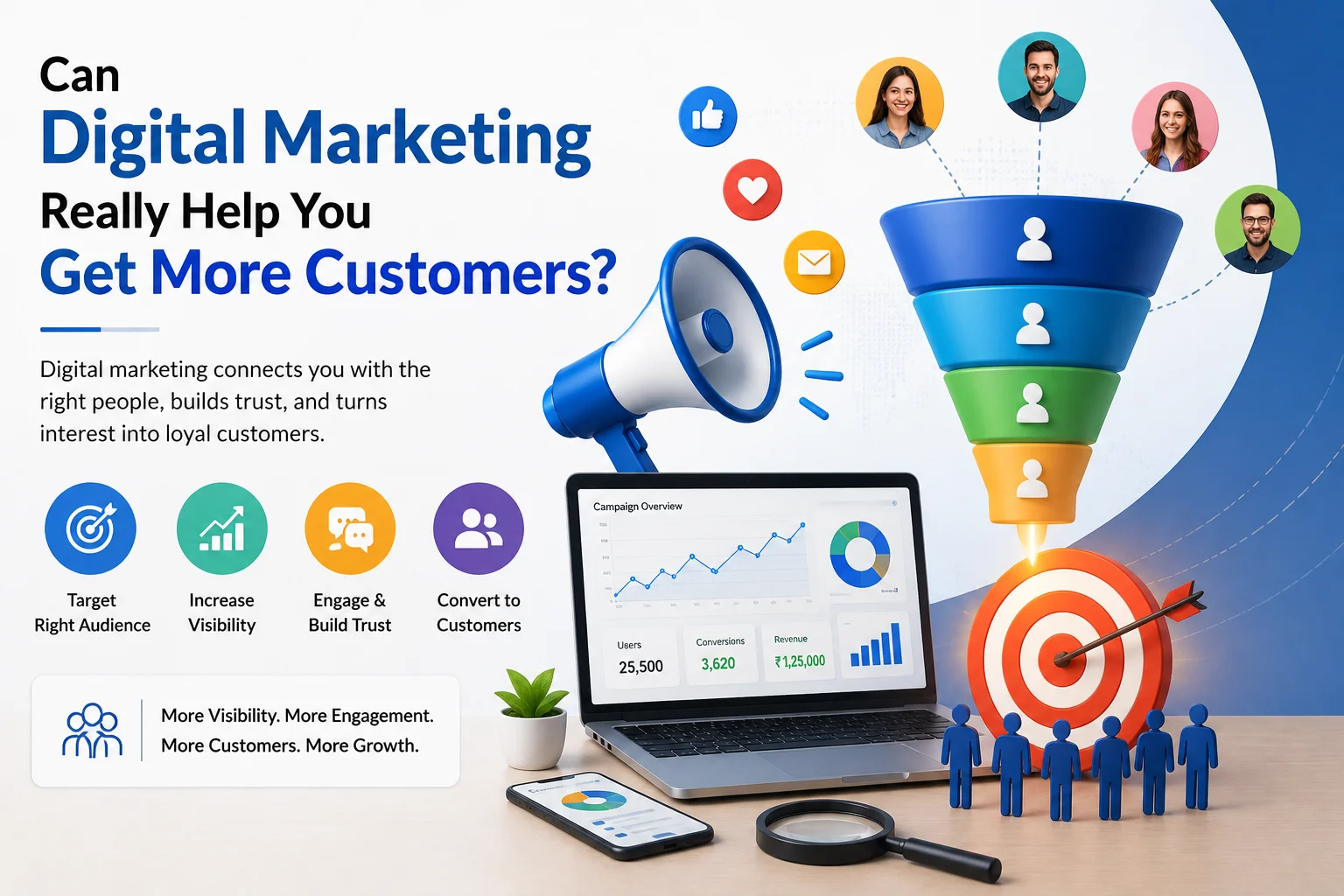
When engineered properly, digital marketing turns cold prospects into buyers through four proven operational mechanics:
Interrupts broad audiences with high print/broadcast costs, static messaging, and near-zero real-time conversion tracking.
Captures active search intent, isolates high-probability buyer segments, and tracks performance down to the individual rupee.
- It captures high-intent demand: Through Search Engine Optimization, your business appears at the precise moment a user searches for your service. You fulfill active intent instead of interrupting someone who was never looking.
- Targeting based on data, not guesswork: Paid ads on Meta and Google filter audiences by geo-radius, industry, income level, purchase history, and intent signals, directing ad spend exclusively to viable buyers.
- Measurable down to the rupee: Web analytics, tag tracking, and CRM integrations show impression-to-lead and lead-to-sale ratios with full attribution clarity.
- Pre-qualifies prospects before sales contact: Reviews, authority content, and case studies establish trust in advance, meaning inbound inquiries enter your funnel ready to buy.
Why Some Digital Marketing Campaigns Fail
When campaigns underperform, the breakdown typically occurs in one of four specific operational areas:
- Undefined Target Audience: Trying to speak to everyone dilutes the value proposition, resulting in weak engagement across all channels.
- Poor Landing Page Experience: Driving paid traffic to slow, non-responsive, or confusing pages produces high bounce rates without generating leads.
- Premature Campaign Termination: Turning off ads or SEO initiatives after two to three weeks cuts campaigns off before algorithmic machine learning optimizes audience targeting.
- Vanity Metric Fixation: Focusing on likes and impressions instead of cost-per-acquisition (CPA) and customer lifetime value (LTV) blinds teams to actual ROI.
The Strategies That Consistently Deliver Customers
A multi-channel marketing engine leverages distinct channels for predictable customer acquisition:
- Search Engine Optimization (SEO): Generates sustainable, recurring inbound leads from prospects searching for targeted commercial keywords.
- Pay-Per-Click Advertising (PPC): Drives immediate visibility on Google Ads and Meta Ads to capture instant demand and scale seasonal promotions.
- Social Media Marketing: Builds brand recall, nurtures prospects through short-form video and educational posts, and keeps your company top of mind.
- Content Marketing: Solves customer pain points, answers objections, and establishes industry authority to increase organic conversions.
- Local SEO & Google Business Profile: Directs foot traffic and local inquiries straight to regional service businesses and storefronts.
How to Set Digital Marketing Up for Success
Results require disciplined parameters: establish your buyer persona before ad spend begins, commit to a 3 to 6 month validation horizon, build high-converting landing pages, and optimize based on verified revenue data.
Conclusion
Digital marketing reliably drives customer growth when backed by sound strategy and relentless execution. The difference between wasted spend and consistent ROI lies in proper targeting, conversion architecture, and iterative optimization. If previous campaigns failed to deliver, don't abandon the channel—rebuild your execution framework.
Partnering with a results-oriented digital marketing agency in Chennai gives your business the technical foundation, cross-channel expertise, and tracking required to build a repeatable customer acquisition pipeline.
Ready to turn your online presence into a customer pipeline?
Get a comprehensive audit of your digital marketing, conversion funnel, and SEO growth roadmap.
Frequently Asked Questions
Does digital marketing actually work for small businesses?
Yes. Digital marketing often works even better for small businesses than large ones, since it allows precise, budget-friendly targeting instead of the wide, expensive reach required by traditional advertising.
How long does it take to see results from digital marketing?
Paid advertising can generate leads within days, while SEO and content marketing typically take three to six months to build meaningful momentum. A combined approach delivers both quick wins and long-term growth.
Why did my previous digital marketing campaign fail?
Common causes include unclear audience targeting, a weak website experience, stopping campaigns too early, or not adjusting strategy based on performance data. These are execution issues, not evidence that digital marketing doesn't work.
Which digital marketing channel brings in the most customers?
There's no single best channel, it depends on your industry and goals. SEO tends to deliver the best long-term ROI, while PPC advertising is ideal for fast, immediate visibility. Most successful businesses use a combination of both.
How much budget do I need to see real results?
Budgets vary by industry and competition, but consistency matters more than a large one-time spend. A modest, sustained monthly investment split across SEO and paid ads generally outperforms a large but short-lived campaign.
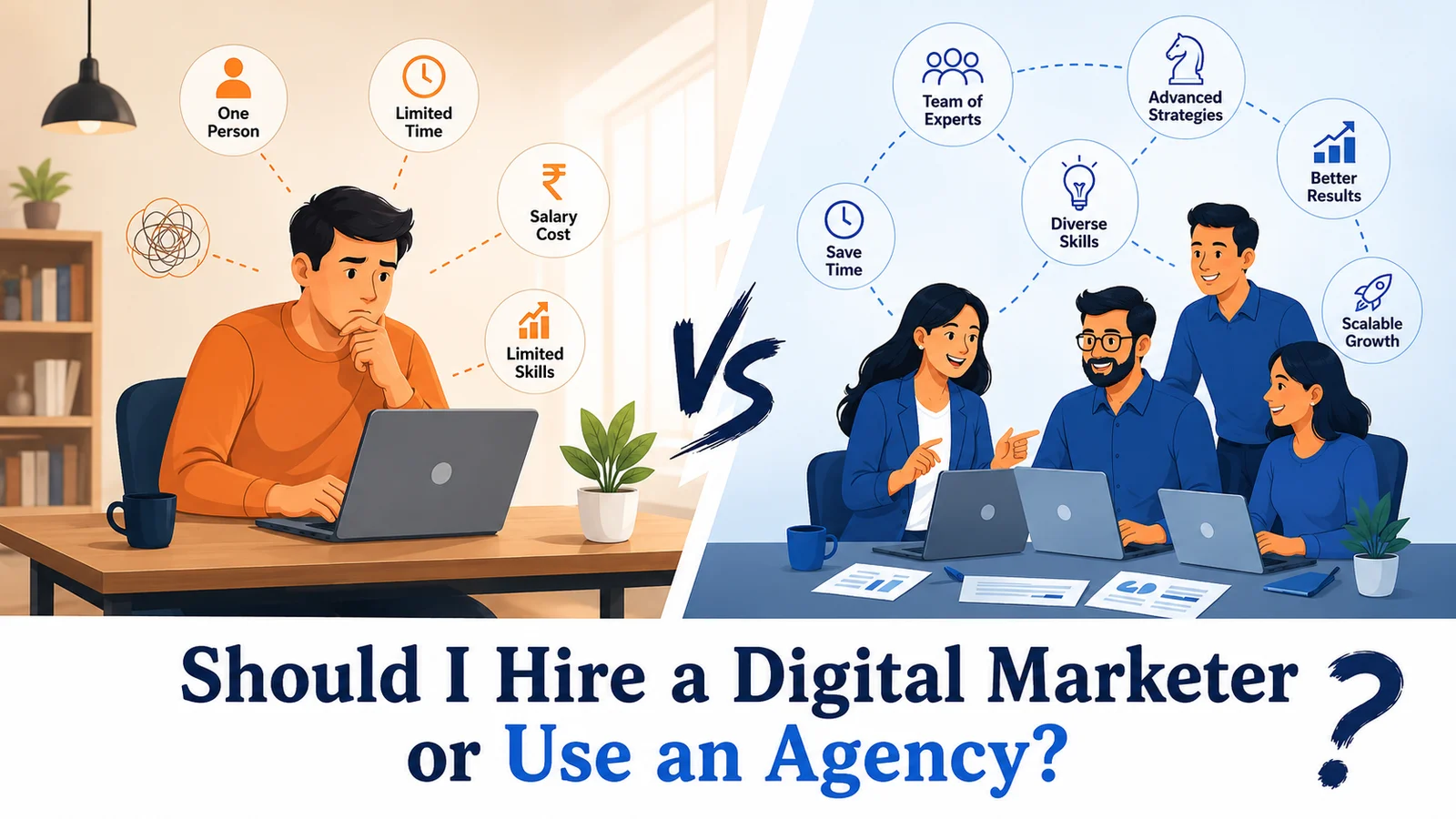
Should I hire an agency or manage digital marketing myself?
It depends on your time, expertise, and budget. Managing it yourself can work for very small campaigns, but an experienced agency brings tested strategies, proper tools, and data-driven optimization that typically deliver a stronger return on investment.